
Kalawao County Traffic Court Records
A ticket written on the Kalaupapa peninsula goes to the District Court of the Second Circuit. That court sits in its Molokaʻi Division. Kalawao County runs no traffic bench of its own. There is no municipal court, no police-court vendor, and no local payment portal. Two state systems split the work instead. eCourt Kōkua shows public traffic case information along with docket events. eTraffic Hawaiʻi takes eligible responses and payments. Each tool has its own job.
On the traffic docket you may find the charge and the court location. Case status, event codes, a judgment, and money entries appear too. The paper citation still governs your deadline and your options. A portal summary is informational only, never a certified traffic abstract.
Search Molokaʻi Traffic Citations
The Judiciary’s traffic record page routes users to statewide case information and spells out the abstract limit.
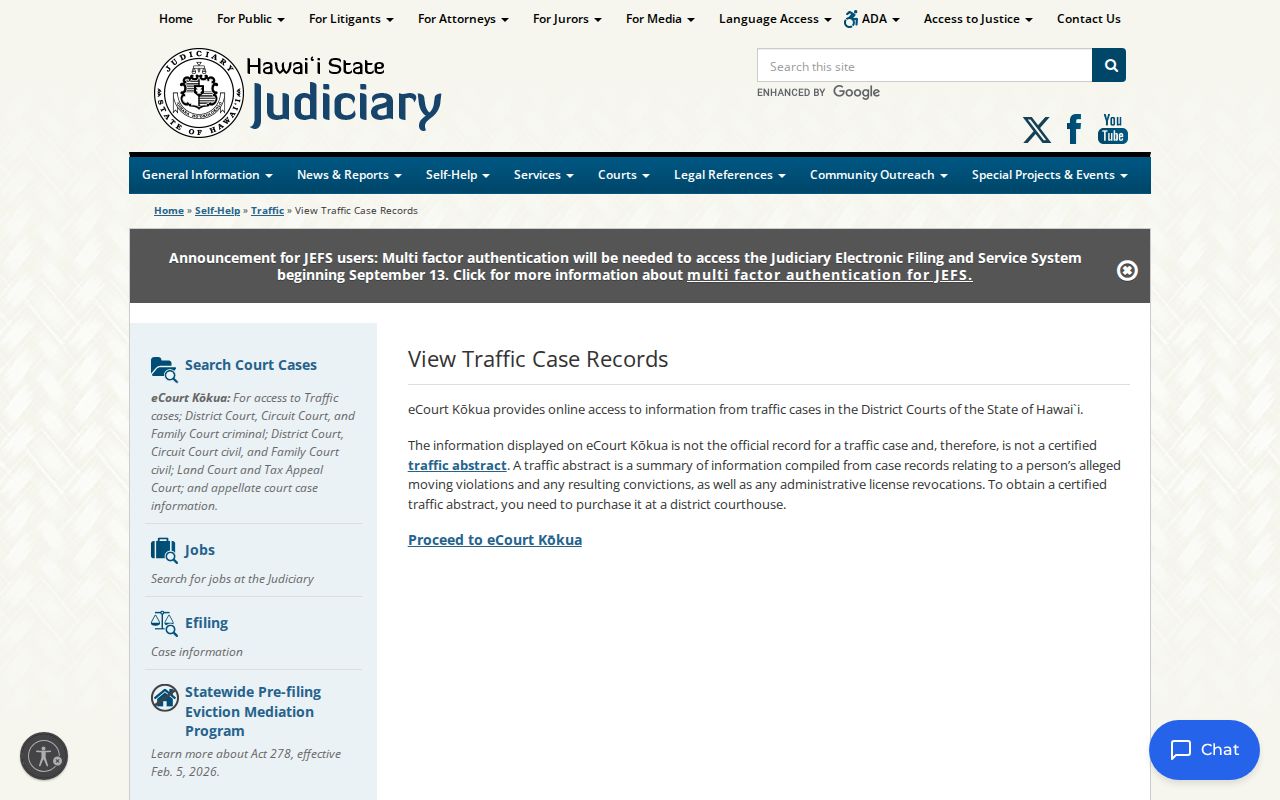
That page draws a clear line between a public docket lookup and a certified record. Begin with the exact citation number. When the search modes allow it, a license number plus its issuing jurisdiction, or a correctly spelled name, can work as a backup key.
| Field | Type | Use |
|---|---|---|
| Citation number | Text | Best exact lookup key |
| Driver license number | Text | Alternate or verification key |
| State or jurisdiction | Dropdown | Pairs with license search |
| Name fields | Text | Spelling must match |
| Search or reset | Button | Submit or clear criteria |
Looking Up a Traffic Ticket
Use every route when the portal alone falls short. Online access is quickest, yet staff can take 13 days or longer to key in a case. Don’t let a slow posting push you past the deadline printed on the ticket.
- Read the exact citation number and response deadline.
- Use eCourt Kōkua for the public case docket.
- Use eTraffic Hawaiʻi for an eligible answer or payment.
- If absent, recheck the number and call Molokaʻi District Court at (808) 553-1100.
- Use any District Court counter, mail, or telephone at (800) 679-5949 as the cited option permits.
- Request older public material from the District Court clerk.
Traffic cases older than November 1995 sit outside eCourt Kōkua. Juvenile traffic matters stay out of the ordinary public search as well.
Official Kalawao Traffic Options
The Judiciary traffic center describes payment, written statements, hearings, and other official response choices.
The Judiciary’s traffic center is the dependable starting point when a ticket’s printed instructions need explaining. eTraffic payment is unavailable before entry, after 21 days, for a mandatory appearance, or once a court appearance or order has happened.
For a standard eligible infraction, answer within 21 calendar days by admitting and paying, admitting with an explanation, or denying and asking for a decision as allowed. Whatever the ticket and any later court order say controls in the end.
How to Find Your Traffic Court Date
Your date can surface in several places: the printed citation, an eCourt event, a filed notice, or the Judiciary calendar. Later continuance or reset entries can bump an earlier setting. Confirm the newest date with Molokaʻi District Court before any rural travel.
| Citation | Use the exact printed value, such as citation number as issued. |
|---|---|
| Court | Second Circuit District Court, Molokaʻi Division. |
| Date and time | The current appearance or hearing setting in HST. |
| Location | Confirm Kaunakakai rather than assuming Kalawao has a courthouse. |
| Status | Pending, disposed, default, or another case-level condition. |
The court’s live operational record always wins. A cached calendar is merely a snapshot. Conflicting dates mean one call, with case or citation number in hand, and the clerk’s answer settles it.
Confirm Molokaʻi Traffic Hearings
Molokaʻi District Court sits at 55 Makaʻena Street in Kaunakakai, reachable at (808) 553-1100. The directory notes a staffing-related closure from 11:30 a.m. to 12:30 p.m. Calls may forward to Lahaina staff during that gap. Check ahead before traveling.
No online calendar is not a cancellation. Use the docket, paper notice, and direct court contact to confirm the live setting.
A 2018 official submission described Molokaʻi sessions three times monthly. That history explains why rural settings cluster together, but it is not a current schedule.
Pay or Contest a Ticket
Payment is a choice in the case, not a copying fee. Paying resolves the charge instead of contesting it. Deny, and the matter can be decided by written statement or an in-person hearing. A witness summons for an in-person hearing generally needs a request at least ten days before the setting. The required fees come with it.
| Pay or admit | Contest or deny |
|---|---|
| Uses an eligible online, mail, phone, or counter route. | Requests adjudication as the citation permits. |
| May resolve the charged infraction. | May proceed by written statement or hearing. |
| Must meet the printed response deadline. | Must meet the same controlling deadline. |
Do not ignore the citation: failure to answer can produce default judgment and a license stopper. Failure to appear on a traffic crime can lead to a bench warrant.
Read Kalawao Traffic Docket Codes
TRAVIS stands for the Judiciary’s Traffic Violations Information System. Repeated TRAVIS entries mark system processing, not new charges. Decode each code beside its neighboring entry, with the official code glossary at hand. Case status describes the whole case and may not give each charge’s result.
- CTCA
- Citation, Traffic Crime Arrest.
- TRAVIS
- A traffic-system event, not a separate offense by itself.
- Continuance
- A move from one court setting to a later date.
- Judgment
- The court’s formal decision or result.
A PDF icon means a public document image is for sale. It proves nothing about a judgment by itself.
Traffic Court Record vs Driving Record
Two offices keep two separate files. The District Court clerk holds the traffic case docket, while the motor-vehicle licensing system keeps the driver record. Pulling a court docket neither creates nor certifies that other file.
| Point | Court traffic record | Driver record |
|---|---|---|
| Custodian | Hawaiʻi State Judiciary clerk | State driver-record system |
| Shows | Citation, events, hearing, judgment, finance entries | Licensing record maintained under motor-vehicle processes |
| Access | eCourt Kōkua or court request | Licensing agency request channel |
The eCourt screen states plainly that it is not a certified traffic abstract. When you need that official product, buy one at a District Court courthouse.
Copies and Fees
Basic docket information costs nothing. A public PDF runs $3 for one through thirty pages, then $0.10 per page beyond thirty. Certification adds $2 under the court rules. Older traffic files may need clerk retrieval and an invoice.
| Item | Fee | Note |
|---|---|---|
| Docket view | No charge | Informational public data |
| PDF through 30 pages | $3 | When an image icon appears |
| Extra pages | $0.10 each | After page 30 |
| Certification | $2 | Added where available |
| Older record retrieval | By invoice | Ask the District Court |
Online purchases are nonrefundable. Confirm the citation, docket date, and document description first.
Federal Systems Are Separate
A routine Kalawao traffic citation is a state District Court case. The manifest also records a separate federal docket route, and PACER is the tool that searches federal records.
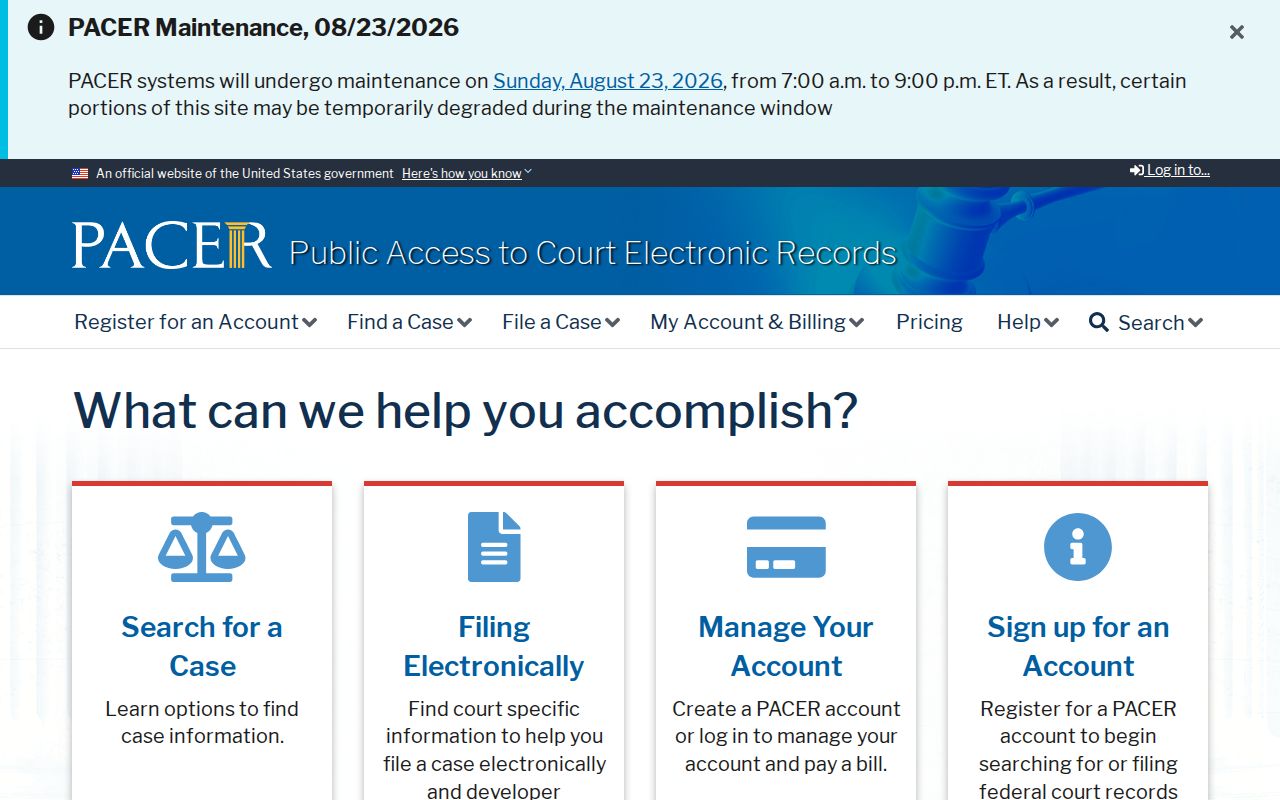
Turn to that system only when the matter truly belongs in federal court, and review official PACER pricing first.
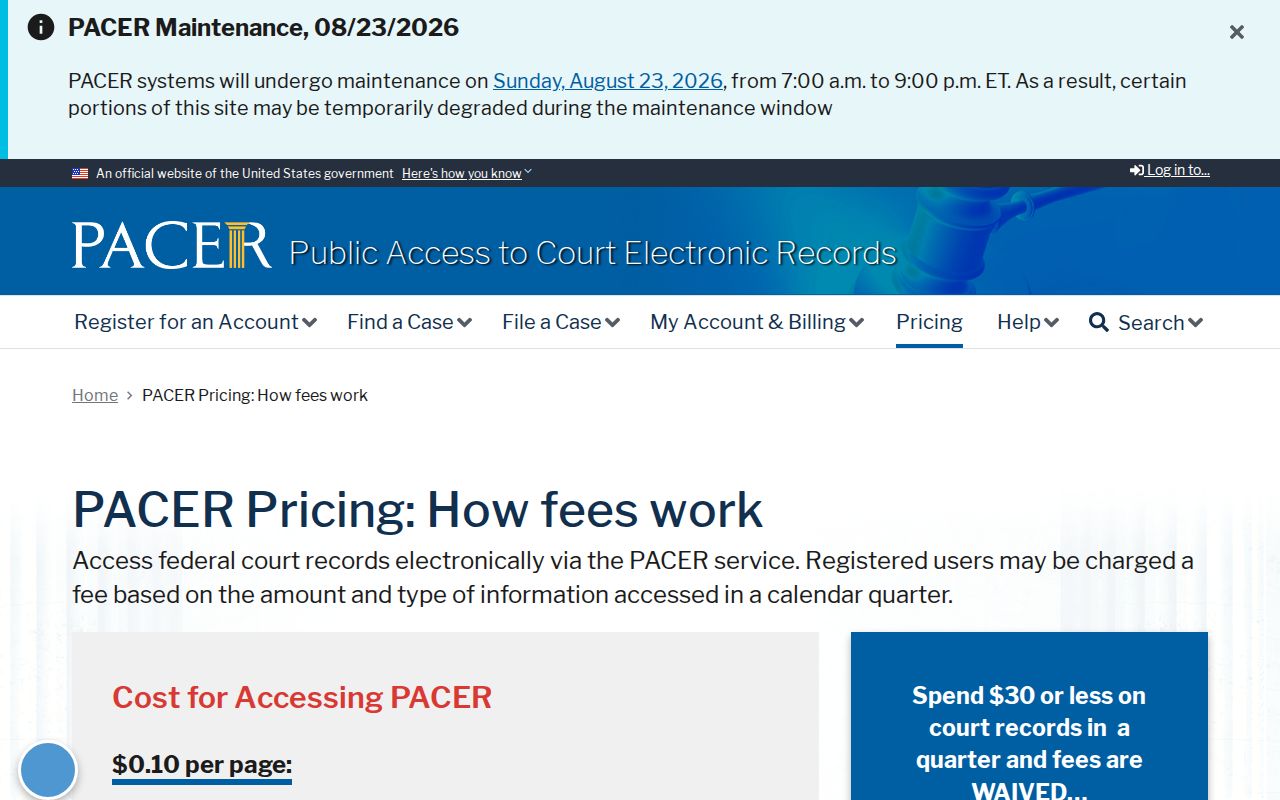
PACER charges $0.10 per page, with bills of $30 or less waived each quarter. Federal docket entries flow through the District of Hawaiʻi CM/ECF system.
CM/ECF does not replace eCourt Kōkua or eTraffic for a state citation.
Kalawao Traffic Access Limits
Not everything shows up in the portal. Kalawao County juvenile traffic records stay out of public results. Sealed or confidential material does too. An adult who wants a copy of their own juvenile traffic abstract must follow the process the Judiciary lays out. When public material goes missing, the District Court counter is still the way in. A phone call or a written request works as well.
Search results take care in reading. A matching name proves nothing by itself. An empty result does not mean no citation exists. Compare the location, the date, and the exact number before drawing any conclusion. The Kalawao County court dates reference shows how calendar notices and docket events line up for a current setting.
Timing matters too. A brand-new ticket may simply not be in the system yet. Write down each date you run a docket search, and call the court before the deadline if nothing appears. Staff can tell you whether your citation number has arrived and which response channel still works. A web search date never replaces the response date printed on the citation or in a later court order.
Cases older than the electronic era call for archive help. Public electronic traffic coverage starts in November 1995. Anything earlier may need the District Court to pull archived files. Give the clerk the closest date you know. Give the exact name used at the time, the citation number if you have it, and the specific record you want. Say whether you need a docket, a filed order, a plain copy, or a certified traffic abstract. Those are four different products, and the clerk cannot guess which one you mean.
Geography adds a wrinkle. An event on the peninsula may carry the Molokaʻi location code instead of a county name. That fits the circuit-based system. Before discarding a result, confirm Second Circuit and the ML code. A felony traffic crime that moves past District Court will show a transfer or related-case entry. It leads to a new Circuit case ID. Follow it.
Read the docket in time order. The first charge is only an allegation. A payment event may reflect the resolution chosen, while a later judgment records the formal result. Continuances cancel earlier settings, and financial codes often mean processing rather than a new penalty. Check nearby entries and the official glossary. That keeps one abbreviation from being read as a fresh charge or a separate court date.