
Searching Kalawao County Criminal Dockets
Begin with eCourt Kōkua. It is the official statewide portal for public District, Circuit, and Family criminal cases. When the filters appear, choose Second Circuit and Molokaʻi. An exact case ID works best. A name search can surface candidates, but a match alone does not prove identity. Before trusting any docket result, confirm the court, the case type, the filing date, and the caption.
Use every documented channel when the portal comes up short. Missing District material? Call or visit Molokaʻi District Court. For Circuit records, ask the Legal Documents Branch at Hoapili Hale. Name the precise charge, order, filing date, and case ID. That detail helps staff tell a docket index apart from the underlying criminal filing. It also cuts avoidable search time. Phone, counter, fax, and mail requests all work. Many courthouses offer free public-terminal viewing, though callers should confirm Molokaʻi terminal coverage before traveling. Written requests suit older or non-imaged court records.
- Enter eCourt Kōkua through the stable Judiciary page.
- Choose criminal case type, Second Circuit, and Molokaʻi where offered.
- Search the complete ID first, or use careful party-name criteria.
- Verify the court and open the chronological Case Dockets tab.
- Ask the proper clerk for a filed or certified order when exact text matters.
Kalawao Criminal Case IDs
Case IDs tell you which court you are in. A District matter tied to Molokaʻi may show 2D / ML. A Circuit criminal matter may show 2C. Current IDs also encode case type, year, and sequence. Older identifiers follow different rules and need official conversion guidance. Never guess punctuation or strip characters out.
The split matters most in felony cases. Complaint, arrest, probable-cause, and preliminary entries often begin in District Court. If the felony moves forward, it can pick up a new Circuit ID. Follow the transfer, commitment, and related-case references rather than expecting one uninterrupted Kalawao County criminal docket. The Judiciary docket FAQ explains which cases and docket data are public and which are not.
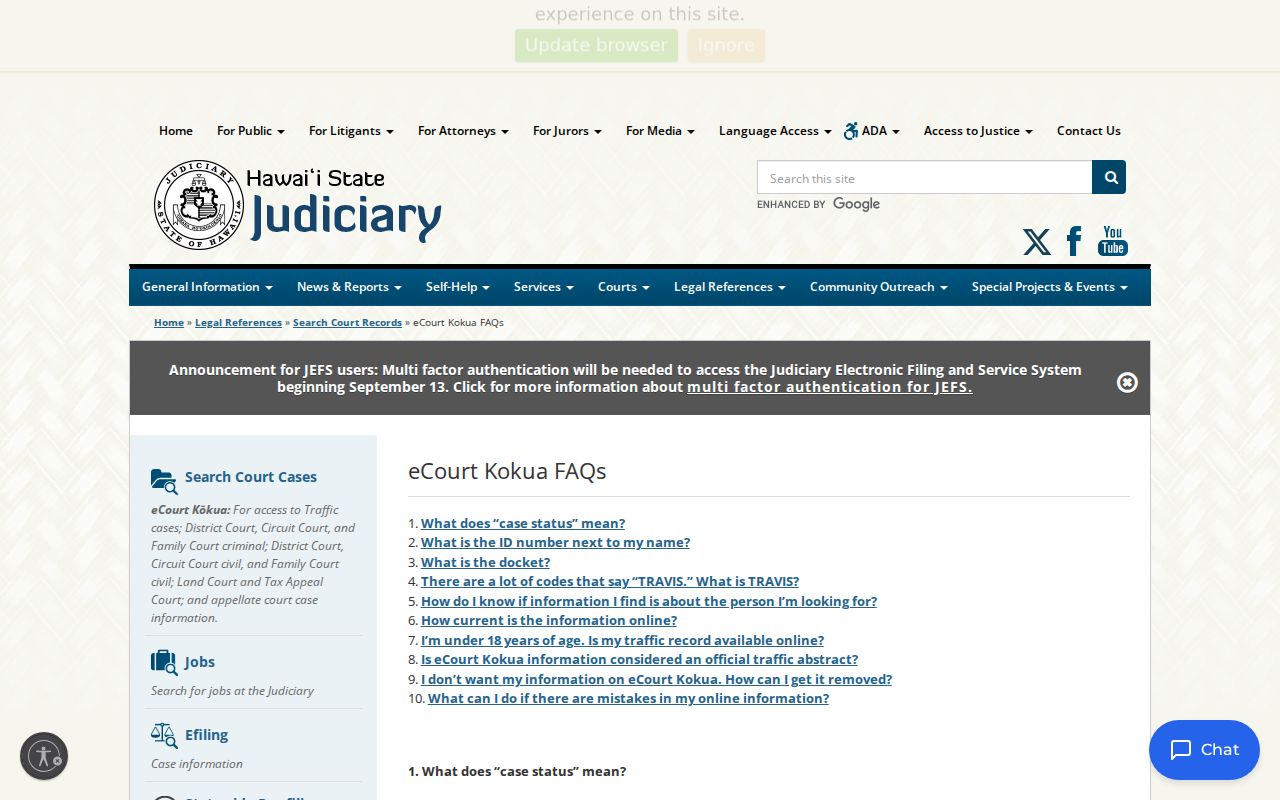
The source helps separate the case-level label from the outcome of each count.
Inside a Kalawao County Criminal Docket
The Case Dockets tab is an index, not the full file. Read the header first, then work through each dated event. A filed charge is only an allegation. A conviction is something else entirely. A motion stays a request. A later minute entry or order shows the ruling. Case status describes the whole file. Each count can carry a different result.
| Case ID | Court, circuit, location, type, year, and sequence. |
|---|---|
| Charges | Offense text or code and a statutory reference when entered. |
| Events | Complaint, warrant, counsel, bail, motions, plea, judgment, and appeal. |
| Settings | Date, time, proceeding type, and location when published. |
| Disposition | Case-level and count-level outcomes, read separately. |
| PDF icon | A purchasable public image; no icon does not erase the filing. |
If precise terms matter, buy the actual order. Basic docket text is free, but the short entry may leave out the full reasoning or conditions.
Decode Kalawao Criminal Docket Codes
Keep the official eCourt code glossary open beside the neighboring events. BTC means bail to Criminal Compensation Fee. BTT means bail to court cost. FWD means fees waived, and JL means jail sentence. Bail transfer codes are financial transactions, not fresh charges.
- Case status
- The state of the whole case, not every count.
- Disposition
- The recorded outcome, such as dismissal or conviction.
- Arraignment
- An appearance when charges are addressed and a plea may occur.
- Continuance
- A move from an earlier setting to a later date.
The official Judiciary glossary appears in this source capture.
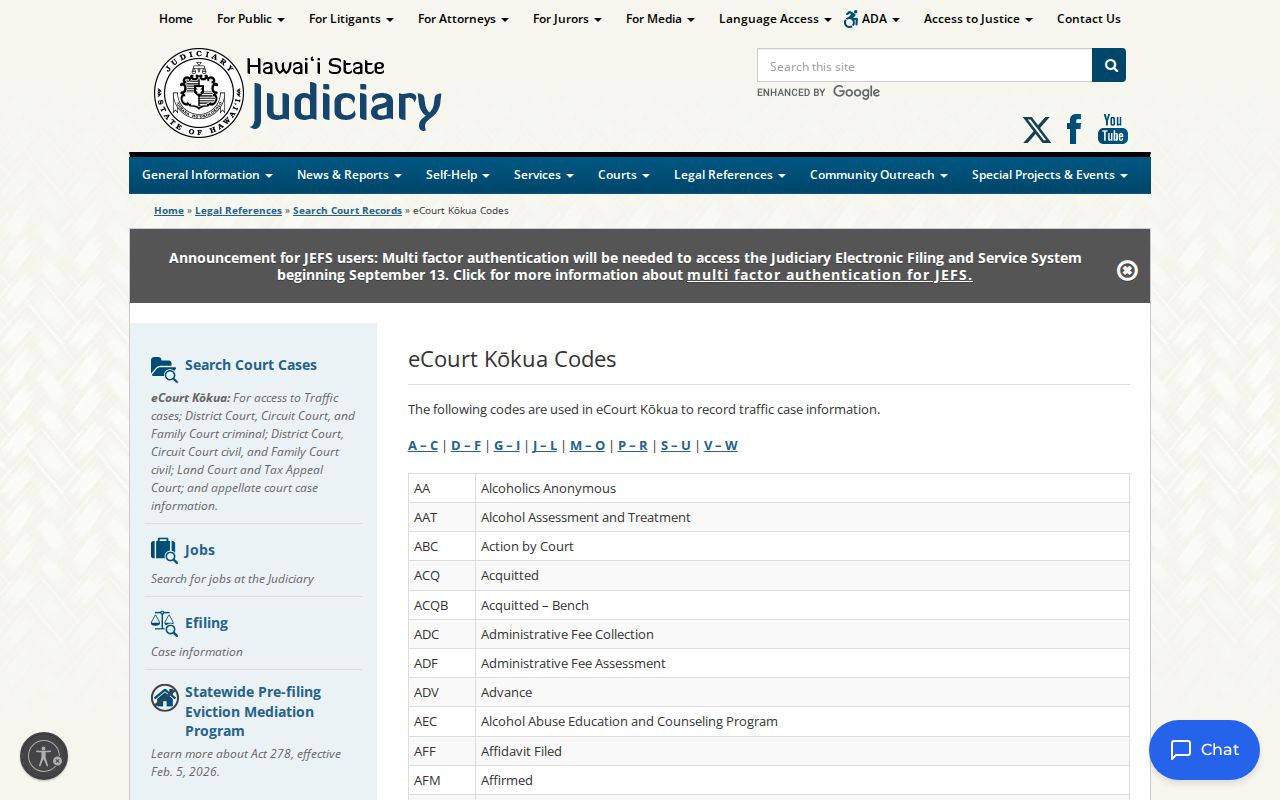
Context still controls because one short code cannot replace the full sequence.
How a Criminal Case Moves
A case may move from complaint or citation through initial appearance, arraignment, counsel and bail entries, motions, pretrial hearings, plea or trial, judgment, sentence, and appeal. Not every case hits every step. The chronological record controls.
Docket flow: Charge Filed › Arraignment › Pretrial › Plea or Trial › Disposition › Sentencing
Check the newest setting and every continuance after it. Rural Molokaʻi calendars can change, so the assigned court is authoritative. A web calendar is only a snapshot, never a guarantee.
Older Kalawao Criminal Court Records
District criminal cases from before August 2012 fall outside eCourt Kōkua. That gap does not mean no case exists. Call Molokaʻi District Court at (808) 553-1100. For Circuit files, call the Legal Documents Branch at Hoapili Hale at (808) 244-2752. Remote requests can go by fax to (808) 244-2932. Invoice and prepayment are handled under the branch process.
A public PDF icon marks an online image. Paper, microfilm, or off-site files may take longer and cost more. A certified copy is authenticated by the clerk, which the free portal screen is not. When requesting a copy, state the case ID, docket date, and exact document.
Written requests need enough detail for staff to find the right Kalawao-related file. Give your contact information. Name the District or Circuit division, the complete case number, the caption, and the exact document title. Add the docket date and the copy type you want. Allow at least ten business days for a faxed request. Allow fifteen to twenty business days by mail. Off-site material takes more. The branch sends an invoice, so do not enclose payment with the first request. Only need the event date or case status? The free docket may answer it without a copy charge. A transcript takes a different route through the court reporter. A clerk's minute entry is not a word-for-word account of a hearing.
Molokaʻi District Court
55 Makaʻena Place, Kaunakakai, HI 96748
(808) 553-1100
Second Circuit Legal Documents
Hoapili Hale, 2145 Main Street, Wailuku, HI 96793-1679
(808) 244-2752
Courts That Hold Criminal Dockets
Kalawao County runs no courthouse of its own. There is no elected court clerk, no municipal court, and no county criminal court either. Criminal matters tied to Kalawao instead land in neighboring facilities. Molokaʻi District Court takes traffic crimes and misdemeanors. It also handles the early steps of a felony case. The Circuit Court of the Second Circuit handles felonies and anything headed to a jury. Family Court covers family categories. Juvenile matters stay out of public search.
So an arrest in Kalawao can still produce a Molokaʻi or Wailuku court docket. Where the event happened matters. So does where the file lives. The Judiciary media rules set out what recording is allowed inside court facilities.
Access to a docket does not grant permission to record a hearing.
Kalawao Drug Court Context
The Molokaʻi Drug Court is a Second Circuit specialty program. Its phone line is (808) 553-3397. For search purposes, the underlying criminal case is still the file that matters. Treatment details are often restricted. Public docket entries will not tell you everything about the program.
Joining the program does not open a separate Kalawao criminal portal. Track the proceeding the ordinary way. Use the District or Circuit case ID, the court level, and dated docket entries.
Keep the base case separate from protected program details. Search the standard criminal ID, look only at entries released for public access, and call the assigned court when a label confuses you. One caution matters here. A brief specialty-court entry does not reveal treatment terms, compliance, or a later judicial decision. Those facts may need an authorized request or may stay restricted entirely. The public docket is best used to follow court activity, confirm settings, and spot filed orders. It is not a full account of a participant's program work. Verify any listed setting with the court. An order shows a public PDF icon? Pull the filed text for the exact terms. When there is no image, give the clerk the case ID and docket date. That keeps your request anchored to a public court record without reaching for protected treatment facts.
Sealed Dockets and Public Access
Public access to a Kalawao court docket rests on the Hawaiʻi Court Records Rules. Those rules yield to statute and to court orders. Electronic records mask Social Security numbers, birth dates, home addresses, and home phone numbers. Sealed, confidential, and juvenile matters are simply excluded. A failed docket search can also trace back to an old case or a wrong code. A misspelled name is another culprit. So is data that has not caught up yet. The Hawaiʻi Court Records Rules spell out the access rules. They also cover the clerk's custody over court records.
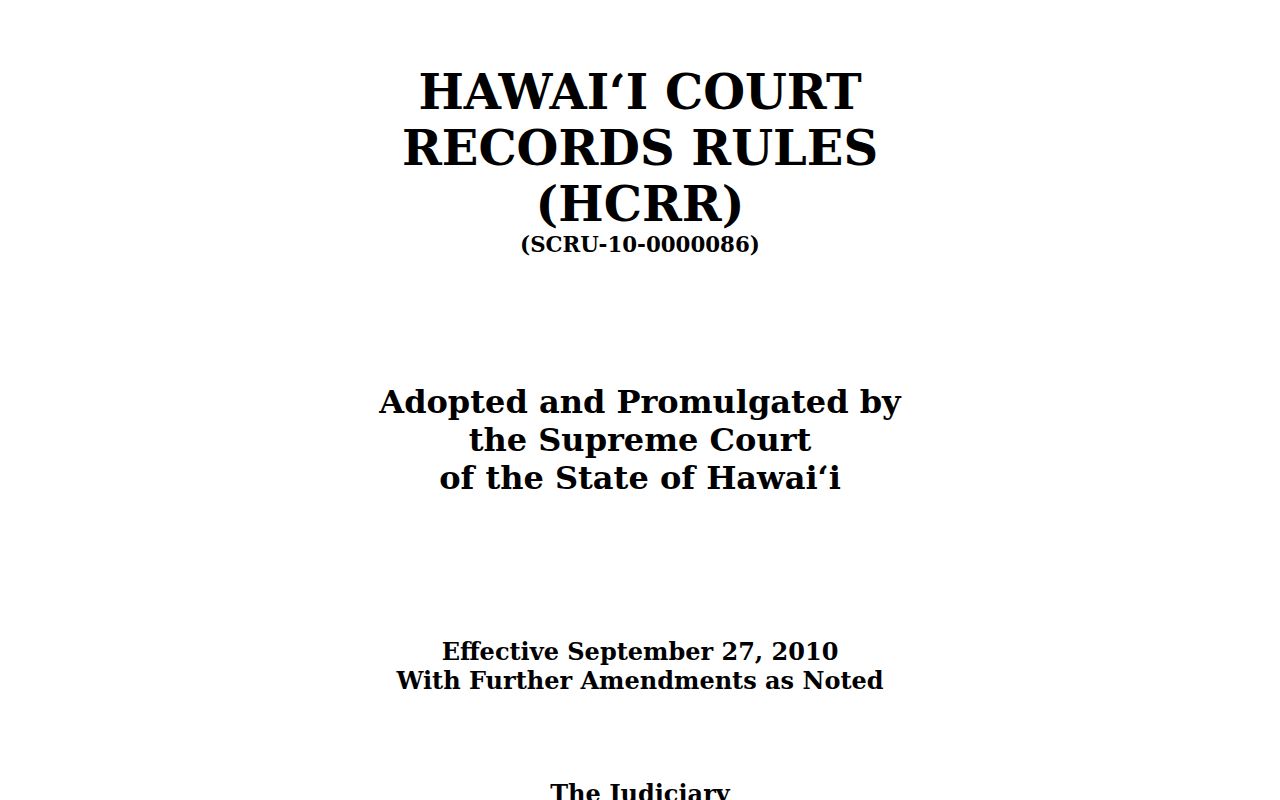
The clerk, not a Kalawao administrative agency, holds the legal court record.
Key access rules:
HRS § 571-84 restricts juvenile records.
HRS § 831-3.2 provides a qualifying arrest-record expungement process, not automatic court-file sealing.
Kalawao Expungement Boundaries
Expungement does not mean every docket entry vanishes. The statute covers qualifying arrest records. It does not erase whole court files. Access to a filed court docket still turns on governing law. It also turns on any sealing order. Neither the portal help line nor the Department of Health can rewrite a docket. The official HRS § 831-3.2 expungement provision sets out the full statutory text.
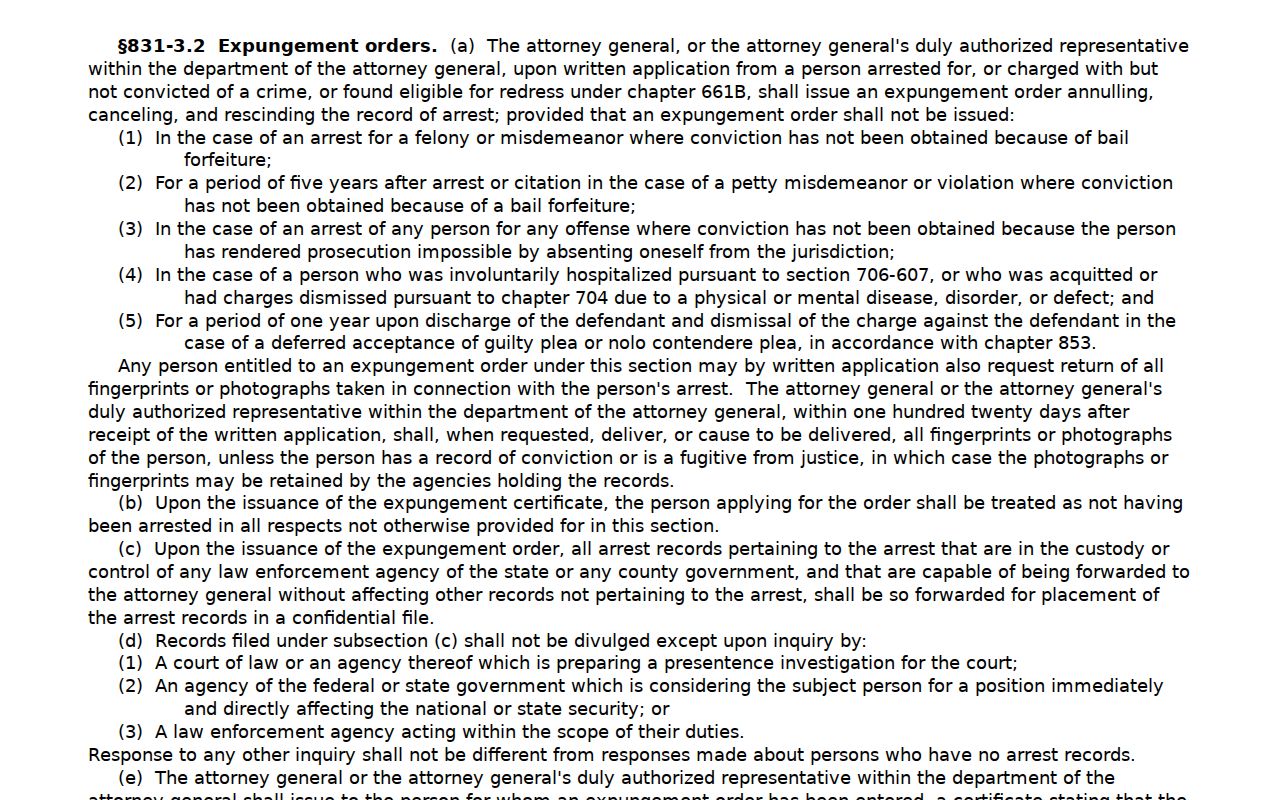
Anyone seeking a change to a record must go through the statutory or court process. The official juvenile confidentiality law draws a separate boundary of its own.
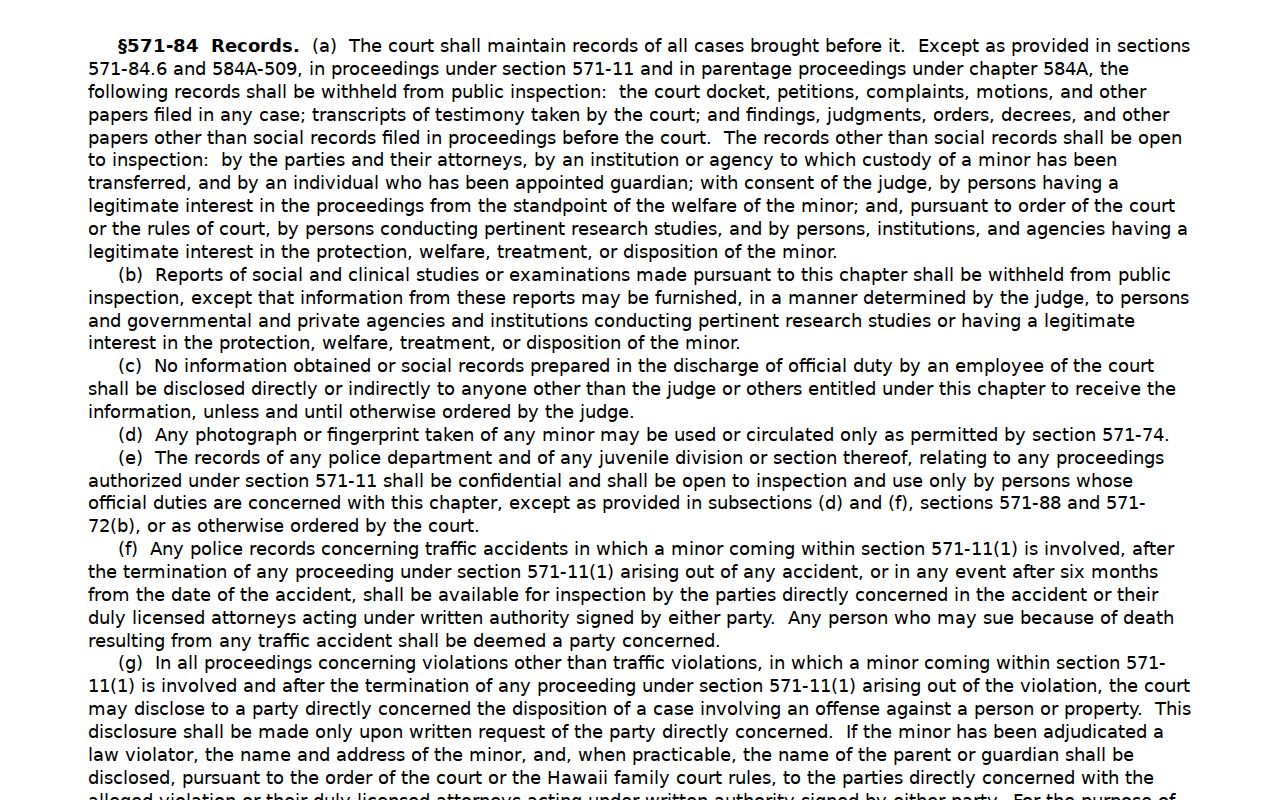
That protection explains why juvenile matters do not appear in ordinary public searches.