
Getting Kalawao County Court Records
Kalawao has no courthouse and no elected county clerk. The Hawaiʻi Judiciary records guide lays out three ways in: online access, a visit to a courthouse, or a written request. Start with eCourt Kōkua. It gives free case information plus a chronological Case Dockets tab. Pay for a public PDF only when you truly need the filed text itself. If no image shows up, ask the clerk who holds legal custody of the file.
District and Family matters filed on Molokaʻi go to Molokaʻi District Court. Circuit documents go elsewhere. Remote requests do too. Both belong at the Second Circuit Legal Documents Branch at Hoapili Hale. A phone call can sort out plenty. It tells you who the custodian is, whether a terminal is open to you, and what sits in the archive. Mail and fax both work as documented channels. One caution applies. A request under Hawaiʻi’s Uniform Information Practices Act does not replace asking the court clerk for a judicial case file.
- Search eCourt Kōkua and copy the full case ID.
- Note the exact docket date and document title.
- Choose an online PDF, counter visit, phone call, fax, or mail.
- Select inspection, a plain copy, or a certified copy.
- Wait for an invoice before paying for a written request.
Where Kalawao Court Records Live
Kalawao County’s odd structure can steer a docket search in the wrong direction. Health agencies carry historic duties on the peninsula. The records still stay with the Judiciary, though. The statewide court directory shows which offices serve these cases.
View the official statewide court directory source.
That directory explains why a Kalawao record request goes to state court staff rather than a local county desk. District files often carry the 2D/ML prefix. Circuit files are run from Wailuku.
Molokaʻi District Court
55 Makaʻena Street, P.O. Box 284
Kaunakakai, HI 96748
(808) 553-1100
Second Circuit Legal Documents
Hoapili Hale, 2145 Main Street
Wailuku, HI 96793-1679
(808) 244-2969
Fax: (808) 244-2932
Court Record Types
A docket and a case file are two different things. The docket is the free chronological index. The file holds the pleadings, orders, judgments, and other papers indexed there. Certification authenticates a copy. Public Kalawao County court records cover a wide range. They can include District traffic and civil cases, public criminal records, Circuit civil or felony matters, probate files, and the public parts of Family Court matters.
- Case summaries and dated docket entries
- Complaints, petitions, answers, and motions
- Hearing notices, orders, and judgments
- Public traffic, criminal, civil, and appellate filings
- Plain, file-stamped, or certified copies
A transcript is something else entirely. It is a word-for-word account made through the court reporter, not a docket entry. Exhibits may need special review or a court order. Record type also decides the custodian. A Molokaʻi District file might hold a citation, complaint, minute entry, judgment, and financial history at the local clerk. A Second Circuit felony or major civil file can include motions, exhibits, notices, and signed orders kept through Hoapili Hale. Family Court records have a stricter access line because juvenile and other confidential categories are withheld. An appeal opens a separate docket, even though it points back to the trial record. Ask for the document, not just “the case.” A docket tells you what happened and when. A complaint states the filed allegations or claims. An order records a judge’s direction. A judgment states the formal result, and a certified copy authenticates an eligible document. Give staff the exact case ID, docket date, and title so they can pull the right Second Circuit record without extra name-search work.
Kalawao Written Request Timing
The Second Circuit request form wants plenty of detail. It asks for contact details, court, division, case number, caption, document title, date, copy type, and delivery choice. Leave off a usable case number and a name-search charge applies. Hold your money. Staff send an invoice first and require prepayment by an accepted certified instrument.
Minimum window: allow at least 10 business days for fax and 15 to 20 business days for mail. Off-site files take longer.
The Judiciary’s reports offer circuit and statewide context, but no separate Kalawao caseload count. The clerk is the source for any specific file.
See the official Judiciary report archive.
That archive helps with system context. The clerk still answers for the file itself.
Inside a Kalawao County Court Record
The eCourt summary packs in a lot. It shows the court, location, case type, filing date, status, caption, and parties. Case Dockets lists events with dates. A PDF icon means a public image is available, not that any outcome was reached. Read a motion beside the later order that rules on it. Follow reset entries forward to the newest notice.
| Case ID | Court, location, type, year, and sequence, often with ML. |
|---|---|
| Case Dockets | Dated filing and event descriptions. |
| Documents | Public complaints, motions, notices, orders, and judgments. |
| Settings | Hearing date, time, type, and location. |
| Status | A case-level label, not every claim or charge outcome. |
Protected identifiers get blocked out. Juvenile, sealed, and confidential cases may be missing entirely. A missing icon may simply mean an older public filing was never imaged.
Missing Kalawao Court Record Images
Online images have cutoff dates. Older files sit outside them. One cutoff hits District civil PDFs. It covers dates before October 7, 2019. Circuit civil PDFs before October 28, 2019 fall outside coverage too. Family civil images stop at April 25, 2022. The docket may still name an older filing. If so, ask about terminal viewing, archive retrieval, microfilm, or a written copy. New filings can take up to three business days to appear. Double-check the court and location, then wait if the item is recent. A party can register in JEFS for documents in that party’s own case. Remember that an empty result does not prove no case exists. Note: Call before you travel. The rural Molokaʻi office posts a staffing-related midday closure notice.
Fees and Certified Copies
Basic docket data and terminal viewing cost nothing. Buying a filing is a separate matter. eCourt Kōkua charges a flat sum for the first thirty pages, then a per-page sum above that mark. Certification adds a clerk fee. Check the title and date before you pay, because online payments are nonrefundable.
| Service | Amount |
|---|---|
| Basic docket or terminal view | No charge |
| Public PDF, 1 to 30 pages | $3 |
| Pages over 30 | $0.10 each after base |
| Certification | $2 |
| Name search without case ID | $5 per name may apply |
| Archive retrieval or mail | Set by invoice |
Before ordering, ask the receiving office which copy it wants: plain, file-stamped, electronically certified, or embossed. Certification only verifies that a copy is true; it never expands what you are allowed to see in the Kalawao County court docket file.
Federal Records Affecting Kalawao County
Federal cases never appear in eCourt Kōkua. They belong to the U.S. District Court for the District of Hawaiʻi, which tries federal matters for the islands.
Check the official federal courthouse location, which posts the current counter details, before making the trip.
The location page confirms current counter details before travel. Bankruptcy works differently: the Hawaiʻi Bankruptcy Court runs its own gateway for records.
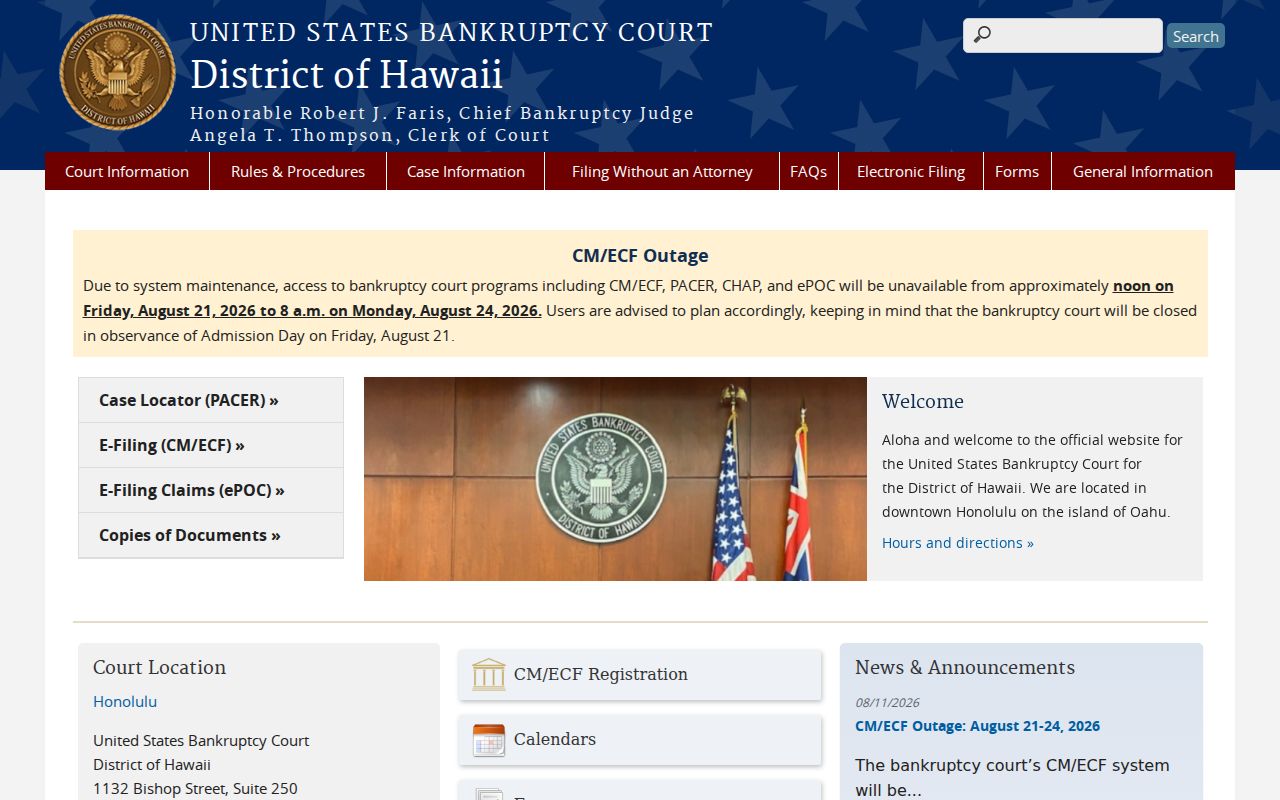
A bankruptcy docket stays federal even when the parties have a Kalawao link. Ninth Circuit review handles the appeals.
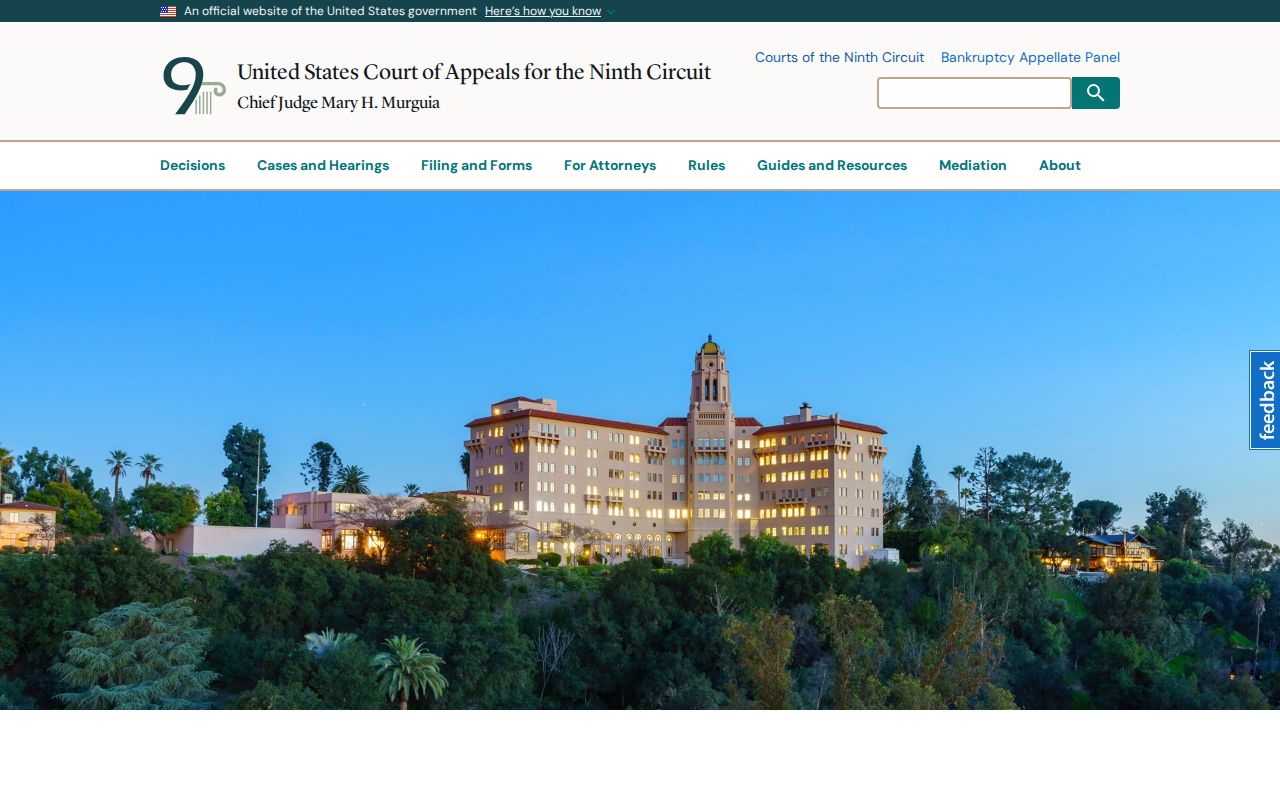
The appeal source completes the federal path without mixing it with state records.
Sealed Records and Public Access
Two rulebooks matter here. The Hawaiʻi Court Records Rules control custody, access, confidentiality, and copying for court case files, while HRS chapter 92F reaches many agency records but leaves the case files to court rules.
Protected records: HRS § 571-84 restricts juvenile files. Sealed and confidential records need court authorization. HRS § 831-3.2 expungement does not automatically erase every court docket.
A portal help desk has no power to seal or correct anything. Requests with support go to the deciding court, where the judge applies the law and the rules.
Kalawao Plain or Certified Records
Buy the cheapest product that does the job. A free docket view can confirm a filing or a reset date. A PDF adds the document text itself. Certification earns its fee only when another court or office demands proof straight from the clerk. Start with the Kalawao County case lookup. Find the right Second Circuit file before paying any name-search charge. The forum decides the route. State records live with the Hawaiʻi Judiciary, while federal records run through PACER and the federal clerk. A Kalawao County address alone tells you nothing about who holds the file. Requesting from a distance? Copy the case ID exactly as the screen displays it. Add the court division, the party names as they appear in the caption, the document title, and the filed date. Then say what you want: inspection, purchase, or certification. Those details matter for staff too. They can tell a District record kept through Molokaʻi apart from a Circuit record administered at Hoapili Hale. They also spare you from paying for the wrong filing when several docket entries carry similar labels. Public access still has limits in practice. A clerk can walk you through the request process. But a clerk cannot give legal advice, change a judgment, or open a protected file without authority. When a record is sealed, ask which motion or court order applies. When an entry looks wrong, a party or attorney must back the correction request in the deciding court. The public access help desk cannot adjudicate that fight. Used with care, these channels keep Kalawao County court record requests aimed at the actual document. They also hold each request to the lawful access level.